State Could be Forced to Borrow to Pay its Bills
During a legislative hearing last week, Minnesota finance officials warned lawmakers the state may need to borrow significant amounts of money this spring in order to meet its financial obligations. The action, which was prompted by lower-than-expected revenues, came just weeks after the state’s Department of Finance was forced to delay corporate and sales tax refunds for the second time in six months, citing concerns over the state’s cash flow situation.
These recent shortfalls underscore both the seriousness and immediacy of the state’s budget crisis.
Last session, the Legislature addressed the problem head on by crafting a responsible budget balancing plan that would have brought long-term stability to the state’s finances. Unfortunately, the Governor vetoed our proposal, and used his unallotment authority to drain our budget reserves and enact one-time spending cuts and shifts to push the problem into the future. As we’re seeing now, the Governor’s temporary fix did nothing to address the long-term fiscal challenges facing our state, and put us in a precarious position of having to borrow just to pay our bills.
While the extent of borrowing the state faces is unknown, Minnesota Management and Budget Commissioner Tom Hanson told lawmakers the state’s tax collections are already $223 million lower than officials predicted earlier this year. In the early 1980s, the state borrowed $1.66 billion over four years, which ultimately cost taxpayers more than $124 million in interest payments. In addition, this type of short-term borrowing will jeopardize the state’s credit rating, which means future borrowing for capital projects could be more expensive.
Minnesota Management and Budget has already begun taking actions to cope with the shortfall. Earlier this month, the state delayed $128 million in corporate tax refunds to 461 companies and $11.9 million in sales tax refunds to about 350 to 400 businesses until late December.
The financial issues facing the state now pale in comparison to the challenge that awaits lawmakers in the next biennium. Because the Governor rejected the Legislature’s long-term budget fix earlier this year, the state is expected to face a budget deficit that could top $7 billion in 2011.
 The US Fish and Wildlife Service has been purchasing land in the Minnesota River Valley with the intent to provide additional acreage to the National Wildlife Refuge already in place there. That is an admirable and worthwhile goal. Unfortunately, they have decided to ban snowmobile use on newly acquired lands, specifically on trails that have been in existence there since the 1970s. These trails have successfully co-existed with those uses outlined in the Fish and Wildlife Service’s guidelines since the trail’s inception. Snowmobiling groups and I have been working with our representatives in Congress as well as those at the Fish and Wildlife Services in hopes of finding a solution to the problem before the first snowfall. Even a waiver for conditional use of the established Grant-in-Aid snowmobile trail this winter season seems to be a reasonable compromise.
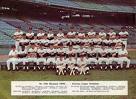 This morning, while my ten year old daughter and I were cleaning the basement, we came across a box. A box with some of the stuff I had as a kid. One of the items she pulled out of the box was an old photograph …a team photograph of the 1965 Minnesota Twins. I told her my Grandpa Clarence kept that photo hanging on a wall in his study. I remember talking to him about the photo when I was her age. The conversation went something like this. “What do you see in this photo?” he asked. I said it was a picture of a baseball team. “That’s right,” he said, “a picture of the 1965 Minnesota Twins. They won the pennant that year and went on to play in the World Series.” “Were you a fan of the team?” I asked. “Is that why you keep it on the wall?” “I was a fan,” he said, “but that’s not why I keep it on the wall. I keep it there as a reminder,” he said. What did he mean by that? I didn’t know until after he died and my dad gave me the photo. He told that Grandpa Clarence wanted me to have it. And then I learned why he kept it on his wall. Grandpa said he never saw a team play harder. They weren’t always the best athletes on the field, but they always gave it their best. Every game. Grandpa said it was one of the most important lessons he ever learned about life. Giving our best. He never wanted to forget it, so he always kept that photo up on the wall to remind him.